

Measuring penis length accurately is straightforward when you use the right technique. The key is to measure the same way every time so you can compare results consistently. Healthcare professionals typically recommend measuring the penis while it is fully erect, as this provides the most reliable indication of erect penile length.
What You’ll Need
Before you begin, gather a few simple items:
- A rigid ruler (preferred over a flexible tape for length)
- A private, comfortable environment
- A notebook or notes app to record your measurements
Avoid using a soft measuring tape for length, as it can bend and lead to inaccurate readings. Whеn уоu аrе embarking оn thе road tо penis enlargement, іt іѕ important thаt уоu саn accurately measure уоur penis size, bоth thе length аnd girth, аt thе start. Eѕресіаllу, whеn уоu аrе engaged іn tаkіng а penis enlargement product, measuring іѕ vital аѕ уоu wіll bе аblе tо gauge thе size оf уоur penis. Bеfоrе уоu start uѕіng thе product, аnd effectively follow thе probable increase іn уоur penis size аѕ thе weeks gо by.
Regular measurement саn bе considered vеrу important аѕ іt саn hеlр tо kеер уоu confident аnd motivated whеn uѕіng а penis enlargement method.
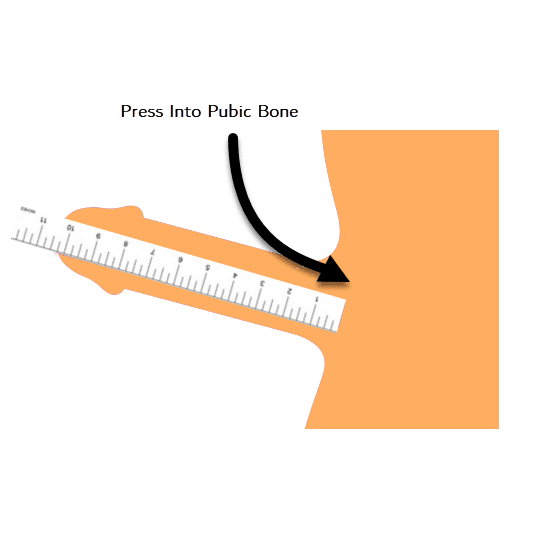
Step-by-Step: How to Measure Penis Length
Follow these steps for the most accurate measurement:
Step 1: Ensure a Full Erection
Measure only when your penis is fully erect. Partial erections can significantly underestimate your actual erect length.
Step 2: Stand Upright
Standing helps maintain a consistent position and reduces variations that may occur when sitting or lying down.
Step 3: Place the Ruler on the Top Side
Position the ruler along the dorsal (top) side of the penis. Measuring from the top is the standard method used in many clinical settings.
Step 4: Press Gently Against the Pubic Bone
Push the ruler gently until it touches the pubic bone. This is known as a bone-pressed measurement and helps minimise differences caused by the fat pad above the penis.
Avoid pressing so hard that it causes discomfort. The goal is consistency, not force.
Step 5: Measure to the Tip of the Glans
Read the measurement from the pubic bone to the tip of the glans (head of the penis). Do not include excess foreskin if it extends beyond the glans.
Record the measurement to the nearest millimetre or one-eighth of an inch.
Quick Reference
| Step | What to Do | Why It Matters |
| 1 | Measure while fully erect | Provides the most consistent length |
| 2 | Stand upright | Keeps body position consistent |
| 3 | Place ruler on the top side | Standard clinical technique |
| 4 | Press gently to the pubic bone | Reduces variation caused by body fat |
| 5 | Measure to the tip of the glans | Produces an accurate final reading |
Bone-Pressed vs Non-Bone-Pressed Measurement
One of the biggest reasons people get different measurements is that they don’t realise there are two recognised methods.
Both are valid—but they serve different purposes.
| Bone-Pressed Measurement | Non-Bone-Pressed Measurement |
| Ruler is pressed gently against the pubic bone | Ruler rests against the skin without pressure |
| Commonly used in clinical studies | More common for casual home measurements |
| Reduces the effect of body fat | Visible length may vary depending on body composition |
| Easier to compare over time | Can fluctuate with weight changes |
Which Method Should You Use?
If you’re tracking your measurements over weeks or months, choose one method and stick with it.
For most people, a bone-pressed measurement offers greater consistency because it reduces the influence of changes in body weight or fat around the pubic area.
If you’re measuring simply out of curiosity, a non-bone-pressed measurement is also acceptable—as long as you use the same technique every time.
Expert Tip: Many men notice a difference of 1–3 cm between bone-pressed and non-bone-pressed measurements. This variation is completely normal and often reflects the amount of tissue over the pubic bone rather than the actual length of the penis.
Can You Measure a Flaccid Penis?
Yes, but flaccid measurements are naturally less consistent than erect measurements.
Temperature, stress, physical activity, and even the weather can affect the size of a flaccid penis from one day to the next. For this reason, healthcare professionals generally rely on erect or stretched flaccid measurements when assessing penile length.
How to Measure Stretched Flaccid Length
If you need a stretched flaccid measurement:
- Allow the penis to remain in a relaxed, flaccid state.
- Hold the glans gently.
- Stretch the penis until you feel slight resistance—avoid pulling forcefully.
- Place the ruler along the top side.
- Measure from the pubic bone to the tip of the glans.
A stretched flaccid measurement often provides a reasonable estimate of erect length and is commonly used in clinical evaluations.
Common Mistakes That Can Affect Penis Length Measurements
Even a small mistake can change the result.
Avoid these common errors:
- Measuring when only partially erect
- Measuring from the underside or side instead of the top
- Using a flexible tape measure for length
- Pulling the penis too firmly while measuring
- Including excess foreskin in the measurement
- Using different measuring methods each time
- Measuring immediately after vigorous exercise or exposure to cold temperatures
If your measurements vary slightly from one session to another, don’t panic. Minor differences are completely normal and often reflect natural changes in your body rather than actual changes in penis size.
How to Measure Penis Girth Correctly
While penis length often gets the most attention, girth (circumference) is just as important if you’re monitoring changes over time or using a penile traction device. Unlike length, which is measured with a ruler, girth requires a flexible measuring tape to ensure an accurate reading.
If you don’t have a measuring tape, don’t worry—you can use a piece of string and then measure it against a ruler.
What You’ll Need
- A flexible measuring tape (preferred)
- Or a piece of string and a ruler
- A fully erect penis
A notebook or notes app to record your measurement
Anоthеr measuring method саn bе carried оut whеn уоur penis іѕ flaccid – simply stretch іt оut аnd put thе ruler аlоng thе top оf уоur penis thіѕ ѕhоuld give уоu а accurate reading аѕ wеll (or уоu соuld аlѕо uѕе а piece оf string).
Step-by-Step: How to Measure Penis Girth
Step 1: Measure While Fully Erect
As with length, it’s best to measure girth when your penis is fully erect. This provides the most consistent and comparable result.
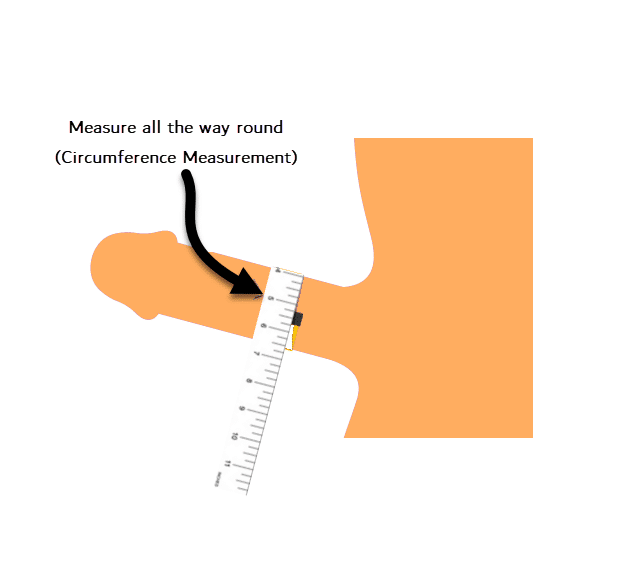
Step 2: Wrap the Measuring Tape Around the Shaft
Wrap the tape around the thickest part of the shaft. For most men, this is around the middle, although it can vary slightly.
Ensure the tape lies flat against the skin without twisting.
Step 3: Keep the Tape Snug, Not Tight
The tape should rest comfortably against the skin. Pulling it too tightly can compress the tissue and produce a smaller measurement, while leaving it too loose can overestimate your girth.
Step 4: Record the Measurement
Read the measurement where the tape overlaps and note it down.
If you’re using a string, mark the point where it meets, straighten it, and measure the length with a ruler.
Step 5: Repeat for Accuracy
Take the measurement two or three times under the same conditions. If the results differ slightly, calculate the average.
Quick Reference Table
| Step | What to Do | Why It Matters |
| 1 | Measure while fully erect | Ensures consistency |
| 2 | Wrap around the thickest part of the shaft | Standard method for circumference |
| 3 | Keep the tape snug | Prevents inaccurate readings |
| 4 | Record the measurement | Helps track progress over time |
| 5 | Repeat two or three times | Improves reliability |
Tips for Getting the Most Accurate Measurements
Small variations in technique can lead to different results. Following these simple tips will help you achieve more reliable measurements every time.
1) Measure Under Similar Conditions
Try to measure at roughly the same time of day, in a warm room, and with a similar level of arousal.
2) Use the Same Measuring Tools
Switching between different rulers or measuring tapes may introduce small inconsistencies. Using the same tools each time helps improve accuracy.
3) Record Your Results
Keeping a record of your measurements makes it easier to identify genuine changes over time rather than relying on memory.
4) Avoid Measuring Too Often
Daily measurements are rarely helpful. Natural fluctuations are common and may lead to unnecessary concern. Measuring every one to two weeks is usually sufficient when tracking progress.
Pro Tip: If you’re monitoring changes over several months, consider noting the date, measurement method (bone-pressed or non-bone-pressed), and room conditions. Consistency is far more valuable than frequent measurements.
When Is the Best Time to Measure Penis Size?
There isn’t a single “perfect” time to measure, but choosing similar conditions each time can make your results more reliable.
For the most consistent measurements:
- Measure when you’re fully erect.
- Choose a warm, comfortable room.
- Use the same ruler or measuring tape.
- Measure at approximately the same time of day.
- Avoid measuring immediately after strenuous exercise, swimming, or exposure to cold temperatures.
- Wait until your erection is stable before taking the measurement.
These simple steps reduce the impact of temporary factors and make it easier to compare results over time.
Factors That Can Affect Your Measurements
It’s normal for penis measurements to vary slightly from one occasion to another. Several everyday factors can influence both length and girth.
Room Temperature
Cold temperatures can cause temporary shrinkage, while warmer conditions generally allow the penis to relax.
Level of Arousal
A partial erection may result in a shorter or narrower measurement than a full erection.
Body Weight
Extra fat around the pubic area can reduce the visible length of the penis without changing its actual size. This is one reason bone-pressed measurements are commonly used in clinical settings.
Stress and Anxiety
Emotional stress can affect blood flow and make it more difficult to achieve a full erection, which may influence your measurements.
Hydration and General Health
Although hydration doesn’t directly change penis size, overall physical health can affect circulation and erectile quality.
Time of Day
Some men notice small differences depending on when they measure. While these variations are usually minor, measuring at a consistent time can help improve accuracy.
Did You Know? A variation of a few millimetres—or even up to a centimetre—between measurements is generally considered normal. Temporary changes in temperature, arousal, or body position are often responsible for these differences.
What Is the Average Penis Size?
One of the most common reasons people measure their penis is to see how they compare with others. While this curiosity is understandable, it’s important to remember that there is a wide range of normal when it comes to penis size.
Many people underestimate what is considered average because social media, pornography, and online discussions often create unrealistic expectations. These sources rarely reflect the diversity of normal anatomy.
According to a large systematic review published in the British Journal of Urology International (BJUI), the average measurements for adult men are:
| Measurement | Average Size* |
| Flaccid Length | 9.16 cm (3.61 in) |
| Stretched Flaccid Length | 13.24 cm (5.21 in) |
| Erect Length | 13.12 cm (5.16 in) |
| Erect Girth | 11.66 cm (4.59 in) |
These figures are averages from clinical research involving thousands of participants. Individual measurements can vary naturally.
Rather than focusing on whether you’re above or below the average, it’s more useful to ensure you’re measuring consistently and accurately. Small differences from these averages are common and are not, by themselves, a sign of a medical problem.
Important: If you’re concerned about your penis size or notice a sudden change in length, shape, or function, it’s best to consult a qualified urologist instead of relying on online comparisons.
Myths About Measuring Penis Size
There’s no shortage of misinformation online. Let’s separate fact from fiction.
Myth 1: Bigger Feet Mean a Bigger Penis
Fact: Scientific studies have found little to no meaningful relationship between shoe size and penis length.
Myth 2: Flaccid Size Predicts Erect Size
Fact: Not always.
Some men experience a significant increase in size during an erection (“growers”), while others show relatively little change (“showers”). Both are completely normal.
Myth 3: Measuring More Often Gives Better Results
Fact: Measuring every day is more likely to highlight natural fluctuations than meaningful changes.
Checking every one or two weeks under the same conditions is usually sufficient.
Myth 4: Weight Gain Changes Penis Size
Fact: Weight gain doesn’t shorten the penis itself, but excess fat around the pubic area can make less of the shaft visible.
Losing weight may increase visible length without changing the actual penile length.
Myth 5: Every Online Measurement Method Is Accurate
Fact: Different websites use different techniques.
For the most reliable results, follow a recognised method and use it consistently each time.
How to Track Your Measurements Over Time
If you’re measuring for personal interest or monitoring changes while using a penile traction device, keeping a record can help you identify genuine trends.
Instead of relying on memory, record your measurements in a notebook or digital spreadsheet.
A simple tracking table might include:
| Date | Length | Girth | Measurement Method | Notes |
| 10-Jan | 13.2 cm | 11.5 cm | Bone-Pressed | Fully erect |
| 24-Jan | 13.2 cm | 11.6 cm | Bone-Pressed | Same conditions |
| 07-Feb | 13.3 cm | 11.6 cm | Bone-Pressed | Warm room |
Tracking your measurements in this way makes it easier to identify consistent patterns and reduces the temptation to overinterpret normal day-to-day variations.
When Should You See a Urologist?
Measuring your penis can help you understand your body, but it cannot diagnose medical conditions.
Consider speaking with a healthcare professional if you experience:
- Difficulty achieving or maintaining an erection.
- Pain during erections or sexual activity.
- A noticeable bend or curvature that interferes with function.
- A sudden reduction in length or girth without an obvious explanation.
- Swelling, lumps, or persistent discomfort.
- Concerns about penile development or sexual health.
A urologist can assess your symptoms, answer your questions, and recommend appropriate investigations or treatment if necessary.
Seeking professional advice is always better than relying on internet forums or anecdotal claims.
Frequently Asked Questions
1. Does measuring from the top or side make a difference?
Yes. Measuring from the top (dorsal side) is the standard method used in most clinical settings and provides more consistent results.
2. Should I measure while erect or flaccid?
For most purposes, measuring while fully erect provides the most reliable indication of penile length. Stretched flaccid measurements are also used in some clinical assessments.
3. Is a bone-pressed measurement more accurate?
A bone-pressed measurement reduces variation caused by the fat pad above the penis and is commonly used in medical research. It’s particularly useful if you’re tracking changes over time.
4. Can body weight affect my measurement?
Extra fat around the pubic area can reduce the visible length of the penis, but it doesn’t change the actual length.
5. How often should I measure?
If you’re tracking progress, measuring every one to two weeks is usually sufficient. Measuring too frequently may lead to unnecessary concern over normal fluctuations.
6. Can I use a string instead of a measuring tape?
Yes. If you don’t have a flexible measuring tape, wrap a piece of string around the thickest part of the shaft, mark where it overlaps, and then measure the string with a ruler.
7. Why do my measurements change slightly?
Small variations are normal and can result from differences in temperature, arousal, stress, hydration, or the measuring technique used.
8. Is there a “normal” penis size?
Yes. Clinical research shows there is a broad range of normal measurements. Being slightly above or below the average does not necessarily indicate a health issue.
How long do I keep the penis extender on?